While the youth services and libraries take the brunt of the cuts in Oxfordshire I have been chasing the release of the >£500 spending data from Oxfordshire County Council. Up until yesterday (21/09/11) they had only released up to March 2011. Now they have finally released the data up to and including July.
While running a few sql queries and looking at the data I have found some areas of spending where I don't think OCC have looked hard enough for savings.
For example OCC have under the pay narrative "expenses" between November 2010 and July 2011 spent 5,2 million, this is a average of 580k a month. It has gone down a bit as a monthly figure in the last few months, July was 289k for example, but without the preceding years data we don't know if this is a real trend. And to be honest, 289k is still too high. To pick a single supplier from within this:
Witney Lakes Resort: £6802, this appears to be for conferences and training. OCC have buildings all over the county with conference rooms, why Witney Lakes?
And incidentally, where the pay narrative is "conference" they spent 73k over the period. Again Oxfordshire is full of OCC property with conference rooms, why they have to hire expensive venues is puzzling. They can book our village hall for £6 an hour!
Similarly on non-school taxis over the same period (November 2010 and July 2011) OCC have spend £176,525.73 thousand. An average of 19k a month, peaking in December to 26k and the lowest point being 10k in May.
On payments to Vodafone, there are only a few councillors that have blackberries and some of their numbers are on the OCC site. I don't see any other mobile numbers on there. They have 22 thousand employees and are spending on average 59k a month.
I'm on Orange payg, I have a smart phone (Orange San Francisco Android, its very good!) and I pay ten pounds a month. If every single employee had a phone, it would break down to £3.7 a month. Clearly they all don't have phones and I would imagine the monthly spend for each handset being probably a more than my tenner, why do they all need mobiles anyway. I suspect they are given out as a perk rather than a legitimate business case.
Within the library budget itself, in their CIPFA submissions the other expenditure was 3.2 million and they have estimated it only going down to 3.1 million.
This isn't the direct spend on libraries, this is the internal recharging on HR, admin, payroll etc. The rural libraries are facing 66% cuts, the other expenditure only 3.1%. The actual library budget itself is on 7.9 million, the 3.1 million doesn't sound like it has been subject to savage cuts to me.
This is some of the pivoted data I picked out by month:
I think there is also too much redacted spending, yes there is data protection issues but there isn't really any detail to make any judgement.
For example under "Other Agency and Contracted Services" spending area "SCS and Pooled Budget" there is 6.1 million of spending that has has "redacted person data."
We get no further information at all on this, nothing. I am not in anyway implying anything dodgy, but if there was there is zero visibility on this spending for taxpayers.
I don't for one minute say all of the above spending isn't legitimate, but don't forget this isn't everything they spend on taxis, expenses and mobile phones etc, this is just the stuff they have paid a bill for over £500 pounds during the period. Where they have claimed back on receipts, company credit cards or the bill was less that £500 it won't appear here.
The point I am trying to make is, whenever we argue that front line services should't be cut, we are given a binary emotive argument like "if it isn't libraries then it has to be social care".
The small amount they are saving by cutting the rural libraries (370k) is literally peanuts in the billion pound budget. Their new website went live the other day (still lots of dead links btw!) clearly other spending is going on that I believe the taxpayers would rather see cut than libraries and youth centres.
Here is the link to the 500 pound spending data:
http://www.oxfordshire.gov.uk/cms/content/council-spending-over-500-pounds
And if you are feeling brave the full combined dataset, go on its your money after all!
https://docs.google.com/leaf?id=0B6dU0yhpP-MUMGY5YjVhN2QtNWMwMC00OTU2LWJkYTYtMGJmMGNmZjNhZmI2&hl=en_US
And a previous blog post where I put some of these kinds of arguments to Keith Mitchell, leader of Oxfordshire County Council. The man likes to travel in comfort :D
http://questioneverythingtheytellyou.blogspot.com/2011/08/keith-answers-some-questions.html
Wednesday, 21 September 2011
Tuesday, 20 September 2011
How very courageous Minister. Oh dear ... is it, why?
Oxfordshire is a county of two different political outlooks. The rural areas are undoubtably Conservative, the City a mix of Liberals, Labour and Greens. This is why I found the proposals for the library cuts very courageous from a political point of view.
We already know the premise is flawed, the volunteer model won't save money and now we know it is also political suicide for the Tories in their rural Oxfordshire divisions.
Here is the cut libraries that have Tory councillors, and calculations based on their majority , the active users and the registered users.
When the councillors are on the doorstep in 2013 and the library users are volunteering and are to busy to vote or more likely having to travel great distances because some of the libraries will have closed by then, it is unlikely they are going to want to pop to the polling both and support the party who took their library away.
The other factors are the other cuts in Oxfordshire, Keith Mitchell's charming weekly letters in the Oxford mail and the fact that the party in power always get a kicking come the local elections.
If the Tory councillors who have a greater number of registered library users than their majority were to lose their seats here is how the political landscape could change:
Clearly the Tories would hold the council, just. But is this risk worth the supposed 370k savings they think they are going to make? All the other factors locally will come into play, not a day goes by without a negative OCC story in the paper. I think any councillor who ignores the wishes of the people they represent will be "very courageous".
Its worth reiterating again where the cuts are falling too:
The cut proposed cuts and the percentage of cuts that area is getting.
The cuts purely on percentages, the complete opposite of Tory policy and ideology.
If anyone can point to why the Tories in Oxfordshire don't want power anymore can they please let me know? I think the Lib Dems and Labour know which seats to target in 2013.
They can save 370k easily from a one billion pound budget, it doesn't have to come out of social services as they keep claiming. Their new website went live last night, at great expense no doubt. Clearly they still have spare cash that isn't going to social care.
Here is a couple of quotes from Cameron on cuts and the big society:
"Any cabinet minister, if we win the election, who comes to me and says 'here are my plans' and they involve front-line reductions, they'll be sent straight back to their department to go away and think again."
"This is not about trying to save money, it is about trying to have a bigger, better society."
Here is a link to the data:
https://docs.google.com/spreadsheet/ccc?key=0AqdU0yhpP-MUdHdGSU94VzZpUFNUNVFGOHpCaGFaYlE&hl=en_US
We already know the premise is flawed, the volunteer model won't save money and now we know it is also political suicide for the Tories in their rural Oxfordshire divisions.
Here is the cut libraries that have Tory councillors, and calculations based on their majority , the active users and the registered users.
When the councillors are on the doorstep in 2013 and the library users are volunteering and are to busy to vote or more likely having to travel great distances because some of the libraries will have closed by then, it is unlikely they are going to want to pop to the polling both and support the party who took their library away.
The other factors are the other cuts in Oxfordshire, Keith Mitchell's charming weekly letters in the Oxford mail and the fact that the party in power always get a kicking come the local elections.
If the Tory councillors who have a greater number of registered library users than their majority were to lose their seats here is how the political landscape could change:
Clearly the Tories would hold the council, just. But is this risk worth the supposed 370k savings they think they are going to make? All the other factors locally will come into play, not a day goes by without a negative OCC story in the paper. I think any councillor who ignores the wishes of the people they represent will be "very courageous".
Its worth reiterating again where the cuts are falling too:
The cut proposed cuts and the percentage of cuts that area is getting.
The cuts purely on percentages, the complete opposite of Tory policy and ideology.
If anyone can point to why the Tories in Oxfordshire don't want power anymore can they please let me know? I think the Lib Dems and Labour know which seats to target in 2013.
They can save 370k easily from a one billion pound budget, it doesn't have to come out of social services as they keep claiming. Their new website went live last night, at great expense no doubt. Clearly they still have spare cash that isn't going to social care.
Here is a couple of quotes from Cameron on cuts and the big society:
"Any cabinet minister, if we win the election, who comes to me and says 'here are my plans' and they involve front-line reductions, they'll be sent straight back to their department to go away and think again."
"This is not about trying to save money, it is about trying to have a bigger, better society."
Here is a link to the data:
https://docs.google.com/spreadsheet/ccc?key=0AqdU0yhpP-MUdHdGSU94VzZpUFNUNVFGOHpCaGFaYlE&hl=en_US
Saturday, 17 September 2011
Open Government
“The consultation is open, there is an opportunity for people to suggest alternatives. Nothing has been said anywhere at any time that people cannot challenge or provide feedback on issues relating to the back office.”
Oxfordshire County Council spokesperson in Oxford Mail story on libraries 03 Aug 2011
Be robust - consultation/ involvement must be undertaken in an open and honest way.
Oxfordshire County Council guidance, six key principles of consultation
"If people don't know what you're doing, they don't know what you're doing wrong."
Sir Humphrey Appleby
As part of the consultation OCC have already released data for the salaries for each individual library. Quite a few of the rural libraries because of their size have one staff member.
Further to this they have released via FOI the full list of libraries and the numbers of staff working at each.
For the back office we have no such breakdown of data, all we have is Management & Professional and service support with the numbers.
I put in a FOI request asking for the salary data, job title and brief description for the above areas of staff spending. They released the data on the last possible day and they did send me what I requested.
The next day it took a strange turn when I received this email:
“On the 12th September we sent a response to your FOI request reference 3323 in connection with the staffing structure for the Library Service. This was sent in error and may contain some personal data in relation to our staff. Please could you disregard that response, and a definitive response will be sent to you tomorrow.
You should not circulate or use the previous response, or any of the salary data contained in it. Electronic and hard copies should be destroyed.
I apologise for the inconvience and confirm that a final response will be sent to you as soon as possible.”
I replied immediately and actually rang and left the officer a message, I had already sent the data round to the other friends groups and informed the person all I could do was forward on this email and the rest is up to them.
Then a couple of days later I got this:
“The salary information provided in the spreadsheet is the actual salary of the staff concerned, and this information is deemed to be personal information. It is normal practice to provide only the scale that a grade attracts, i.e. the minimum and maximum applicable to the grade. Whilst we don't specifically name the staff, it is our belief that in some cases it would be possible to find the names.
I will send you the amended response as soon as I have sent you this e-mail.
Thank you for your understanding and cooperation on this.”
So what they are saying is, it’s fine to release information that allows identification of low paid front line staff, yet for high paid management and back office the salary has to be within grades to protect the staff.
Obviously there has been a lot of back and forth and I have yet to receive a satisfactory response as to the descrepency. This is the guidance from the information commissioner (thanks to @foimonkey) on releasing salaries:
“There is no one rule which can be applied in every case. However, the following guidelines may be useful.
• Salary scales should usually be published as a matter of routine.
• Disclosure should only be to the extent necessary to fulfil a legitimate public interest. This may involve narrowing down advertised scales, for example to the nearest £5000. Only in exceptional circumstances is disclosure of exact pay likely to be justified.
• More senior staff who are responsible for major policy and financial initiatives can expect greater scrutiny of their pay than more junior employees. It will nearly always be unfair to disclose the exact salaries of junior employees.
• There could be factors that weigh in favour of greater disclosure, such as legitimate concerns about corruption or mismanagement, or situations in which senior staff set their own or others’ pay.
• Specific individuals’ concerns should be considered when determining whether the disclosure is justified.”
If it isn’t unfair in their opinion to release exact salaries of junior staff, how can it be unfair in their opinion to not release the senior staff salaries when the ICO stipulates that those on higher salary should expect greater scrutiny? There is also government policy on releasing salaries of staff on over 50K.
Whatever the process is for FOI in Oxfordshire, the first release passed the tests they have in place. Then I suspect someone who wasn’t happy about it intervened against the public interest and in their own interest to try and keep their salary out of the public domain. This is while OCC is happy for library branch staff to have to their salaries on display for the world to see.
OCC have insisted at every stage that they will only deal with individual library groups, if they blame the volume of requests for data I have no sympathy. If the consultation was open and transparent they would have done the following at the very start.
· Gave a full explanation (with supporting data) on what different approaches to savings were considered and discounted
· Be completely open with their data, spending across the library services. The internal recharges, their PLSS, plus and other user satisfaction data. Also their position on how they compare to all other library services around the UK on cipfa (they do have all this)
· Release of the galaxy data on usage of residents of other libraries (this didn’t occur to them)
We wouldn’t be in the position where they are probably breaking the information commissioner rules on identifying staff salaries or if they are not doing that then breaking FOI rules trying to cover their own high paid managers.
Libraries who have only one staff member (and there are a few) know what their librarians are being paid.
It has been a battle on every step of the consultation to get OCC to release data.
p.s 22 of the 54.2 salaries in the first release were higher than the grades. I would hope this is because on has full package costs verses the salary bands. I have asked for clarification....
Wednesday, 14 September 2011
OCC going against government policy
We have some new stats on the cuts to the library service that gives us a more complete picture of how and where the savings are being made:
These new figures on the savings in back office, RFID (self service) and the mobile libraries were given to the Oxfordshire Save Our Libraries group in a meeting they had with the acting head librarian, the director of social and community services and the cabinet member for safer and stronger communities.
Below in a graph:
The RFID has only been rolled out to nine libraries, the extra savings I presume are coming from rolling it out to the other libraries. It has saved on average of 15% of the staffing budget of the libraries it has been rolled out to so far.
Here's a quote from the David Cameron on cuts:
"Any cabinet minister, if we win the election, who comes to me and says 'here are my plans' and they involve front-line reductions, they'll be sent straight back to their department to go away and think again."
This is a quote from him on the big society:
"This is not about trying to save money, it is about trying to have a bigger, better society."
I am not political in the sense I follow a particular party anymore but the cabinet cannot wave this through, how can they?
A quote from Gandalf who has told me he supports the #savelibraries campaign:
"YOU SHALL NOT PASS"
These new figures on the savings in back office, RFID (self service) and the mobile libraries were given to the Oxfordshire Save Our Libraries group in a meeting they had with the acting head librarian, the director of social and community services and the cabinet member for safer and stronger communities.
Below in a graph:
The RFID has only been rolled out to nine libraries, the extra savings I presume are coming from rolling it out to the other libraries. It has saved on average of 15% of the staffing budget of the libraries it has been rolled out to so far.
Here's a quote from the David Cameron on cuts:
"Any cabinet minister, if we win the election, who comes to me and says 'here are my plans' and they involve front-line reductions, they'll be sent straight back to their department to go away and think again."
This is a quote from him on the big society:
"This is not about trying to save money, it is about trying to have a bigger, better society."
I am not political in the sense I follow a particular party anymore but the cabinet cannot wave this through, how can they?
A quote from Gandalf who has told me he supports the #savelibraries campaign:
"YOU SHALL NOT PASS"
Sunday, 11 September 2011
Where OxfordshireCC should be looking to save back office costs
As part of the on-going campaign to save Wychwood library I put in a FOI to Oxfordshire County Council for their CIPFA Submissions. CIPFA (The Chartered Institute of Public Finance and Accountancy) gather data from various public bodies and collate it all together so councils can see how they are doing compared to others. It’s a good idea, the only downside is CIPFA charge for the data if you’re not a public body. Thankfully FOI allows us to see the CIPFA questionnaire that the bodies submit if not the collated data.
I wanted the data for two reasons, to see how the data changes over time for OCC and to compare the OCC data with other authorities. The data from other bodies I found by chance on a great FOI site called “What do they know”. Here are my main findings.
Since 2004-2005 the staffing costs for the library service has gone up from 5,298,738 to 5,917,059. During the same period the “professional staff” has gone down from 40.2 to 37.6 and the “all other staff” has gone down from 188.9 to 160.5. The headings are vague but looking at other sources of data from OCC “professional staff” is the management part of the library service and the “all other staff” is the librarians, staff who work in service support and customer service. Obviously numbers have gone down and salaries have gone up. I currently cannot prove the majority of extra salaries have gone on the management. Anecdotally I know the front line librarians haven’t had pay rises enough to account for all the extra salary that has been made available. Both from the increased pot and the extra cash from those that have left in the period. I will be able to prove this soon though. Below is the data that shows this:
(N.B OCC didn’t fill in the 09/10 cipfa financial bit)
The second part of the CIPFA that I wanted to look at was how OCC compared with other authorities. There is a lot of data to churn through but on issues and income our library service in Oxfordshire actually does quite well compared to others.
Where they do badly though is on other costs. They are completely inefficient compared to others in the CIPFA submissions on capital charges, service support and other expenditure. I had to exclude Worstershire from this one because they haven’t filled out their service support costs. Below is the comparison:
It looks worse when you look at it as a graph:
OCC have a much smaller population to provide libraries for, yet compared to Staffordshire and Notts their service support, capital charges and other expenditure are massive. I’m sure OCC will have plenty of excuses as to why their overheads are so high but if other shire counties with higher populations can do it cheaper then they need to be getting on the phone to them rather than cutting librarians. It shows how inefficient the back office is at OCC.
My initial conclusions on this again reinforce the points I made in my first blog. There is no need to cut the front-line, there are so many potential efficiencies that can be made that would save the more that the 336k their volunteer approach is supposedly going to save. To save you reading the last blog that has all of this here is a brief summary.
For their quantitative analysis they misquote a MLA study to give them five measures to prove what would constitute a core library service that they think would meet the statutory requirements. The factually incorrect sentence is:
This survey emphasises the importance of where people live and work as to whether or not they use a library service.
The MLA reports don’t support this sentence and they did at one point say it was incorrect and pointed me to the save Doncaster libraries blog. This had the MLA checklist which also doesn’t support the five measures. In a later meeting one of the people who did the QA actually claimed the report did support the measures. Out of the 198 page document they managed to get one page of quotes, mostly from the focus groups. The five measures are not in the conclusions of the MLA report, the MLA checklist, the Wirral report or the public libraries act. They have got it completely wrong on and will be in breach of the public libraries act:
"It shall be the duty of every library authority to provide a comprehensive and efficient library service for allpersons desiring to make use thereof,"
Because when the libraries close (and they will under this proposal) there will be people too old to travel the 9 miles to Chipping Norton to use the library and OCC will be breaking the law.
There are many other areas they could look to save within the library service itself:
We know they are installing self-service machines across the service at great expense (994,553!) but I don’t think they have looked at the bottom three enough.
They have also said our volunteer costs that show it won’t actually save money may be too high because they can do some of them in-house:
Now I’m sorry but looking at how inefficient they are in service support, capital charges and other costs above if OCC do anything in house it is going to be more expensive rather than cheaper. And if it is cheaper how come they don’t do this anyway for their own staff? On top of the above they are also hiring a 60k a year volunteer co-ordinator, this will cancel out their tiny gains once they have paid off the costs of training and the 1 million for self service in the first year.
Finally there is the issue of the fact that though out all this OCC haven’t looked at any of the data in their own systems when they made their proposal, the below is the libraries ranked on salary spend and issues with the best performing at the top ranked on the two measures:
The top eleven on this measure of their own data fall into the group having the most funding cut, clearly they haven’t looked at this properly.
The other thing they haven’t looked at is if the existing data supports the whole point of their QA:
Do people use libraries that are not near where they live? Their whole analysis is working on the assumption that because we have libraries near to where we work and visit and that have good transport links then it doesn’t matter about the local library because we can all use the ones near where we work and study etc.
They can prove or disprove this by looking at the data in their galaxy system but when I put the idea to them it hadn’t even occurred to them. In fact the one of the main guys on the analysis is a sociology student doing two days a week at OCC. What qualifications he has in data analysis or libraries I don’t know. I suspect they were told from above what was required and they delivered it. Either way they have been negligent in my opinion by not studying the data they have. If a private company was trying to save costs, would it ignore its own sales and salary data across its stores when reconfiguring its business. This is what OCC have done.
Councils have a statutory responsibility to be open and transparent when consulting and making decisions, this also includes documenting why other possible courses of action were not proposed instead. Nearly all of the above has come from FOI, they haven’t told us why they haven’t looked into the back office sharing, what they got from the Hillingdon visit nor have they been open with any of the data. They haven’t even looked at their own data when drawing up their proposals. Clearly the whole thing is a political big society initiative that has no evidence to back it up. The guy who came up with the big society is the same guy who floated the idea of women not having maternity leave to boost the economy.
It isn’t going to work, they aren’t going to save money and they will be breaking their statutory duties as a council.
p.s I didn't know about http://www.whatdotheyknow.com/ when I was doing my FOI requests, I will be doing them through that site in future. I will find a decent method to share all the data online this week. If anyone needs it before then let me know.
Tuesday, 6 September 2011
Cherry picking after the cherry pickers
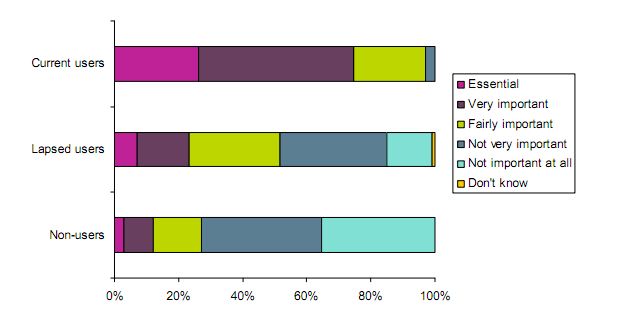
Here are some quotes from the future libraries report November 2010. Obviously in Oxfordshire they cherry picked a few responses from the focus groups and a statistical bit to try and back up their five measures nonsense. Here are some other quotes that I have cherry picked from the reports, some are from users some are from the MLA report conclusions itself. I have also put a few graphs at the end. It is worth bearing in mind nowhere in the report does it say the future of libraries is to close them:
“For pensioners [it’s] a question of money. You can’t afford to buy every book you read.” Library
user, older person, rural area.
“The job of the library should be to continually endeavour to get young people there - nothing can
compare to holding a book – it’s about getting young people and children reading.” Non-user, older
person, rural area
“Bean counters don’t understand the real value of a library. For people who live in villages on their
own, [visiting the library] is like an outing.” Library user, rural area
“I’m flabbergasted at the range of things you can do there.” Non-user, older person, rural area
“The library is essential to community – it adds cohesion to the village.” Library user, older person,
rural area
“As pubs and post offices close the library is the last throw of the dice.” Library user, older person,
rural area
“I reckon a lot is being creamed off at the top and it’s not getting to delivery, to the library
assistants”. Non-user, older person, rural area
“You would have to know any profits are going back into the library and not being swallowed up by
the council.” Library user, rural area
"Emerging evidence suggests that back office mergers alone may save 5 to 10 per cent whilst full service merger across a number of councils could achieve savings in the order 10 to 25 per cent depending on the number of councils involved, locality (rural or urban) and current practice."
The graphs:
How important are libraries to users:
Using volunteers is going to stuff the things people are most satisfied about with their libraries:
What would encourage visits:
“For pensioners [it’s] a question of money. You can’t afford to buy every book you read.” Library
user, older person, rural area.
“The job of the library should be to continually endeavour to get young people there - nothing can
compare to holding a book – it’s about getting young people and children reading.” Non-user, older
person, rural area
“Bean counters don’t understand the real value of a library. For people who live in villages on their
own, [visiting the library] is like an outing.” Library user, rural area
“I’m flabbergasted at the range of things you can do there.” Non-user, older person, rural area
“The library is essential to community – it adds cohesion to the village.” Library user, older person,
rural area
“As pubs and post offices close the library is the last throw of the dice.” Library user, older person,
rural area
“I reckon a lot is being creamed off at the top and it’s not getting to delivery, to the library
assistants”. Non-user, older person, rural area
“You would have to know any profits are going back into the library and not being swallowed up by
the council.” Library user, rural area
"Emerging evidence suggests that back office mergers alone may save 5 to 10 per cent whilst full service merger across a number of councils could achieve savings in the order 10 to 25 per cent depending on the number of councils involved, locality (rural or urban) and current practice."
The graphs:
How important are libraries to users:
Using volunteers is going to stuff the things people are most satisfied about with their libraries:
What would encourage visits:
If you are having trouble sleeping the the link to all parts of the MLA reports is below, I will add quotes and graphs to this from other sources when I find stuff. I am currently trying to discover what the public library service standards benchmarks (PLSS) were replaced with, supposedly it is the "National Library Benchmarks" but I cannot find them anywhere, if anyone knows please add a comment or tweet me (@rubymalvolio).
MLA reports:
The now defunct PLSS stats:
Thursday, 1 September 2011
Flawed consultation and why volunteers won't work
Oxfordshire county council are currently going through a consultation on their proposal for the library service. The proposal is based on their Quantitative Analysis based on research on the following five measures:
Where people,
- Live
- Work
- Study
- Shop
- Public Transport Accessibility
Using various different datasets from other public bodies, most of which we are not allowed to see because they are under “commercial license” they have scored each library and then given an aggregate score. They used half a mile around each for their scoring. Obviously this method is clearly going to be biased against rural areas, over 66% of the half mile circle around Wychwood library is fields. Most of Milton Under Wychwood is ignored as is all the surrounding Wychwood villages and schools that use the library. The city libraries are nearly all surrounded by housing, shops, schools and have good public transport in comparison to rural Oxfordshire. To back up this bias against rural libraries, only one library in their city group of libraries has fallen out of the fully funded bracket. OCC say there isn’t a bias and that the measures are fair. Lots of the other library groups are unhappy about this, including me. What I was interested in though was how they came to the conclusion that the measures used were the correct ones.
To back up the five measures their quantitative analysis has this paragraph:
In deciding this, we looked at what people said they wanted from their
library service – focusing particularly on a large-scale survey carried
out by the MLA in November of 2010. This survey emphasises the
importance of where people live and work as to whether or not they use a library service. (Emphasis added)
This is a 198 page series of quantitative and qualitative reports written by the museums and libraries archive council (MLA). We read thought these documents and couldn’t find anywhere that emphasised their premise. When the Wychwoods group gave our presentation to OCC at the library I put this point to them and the acting chief librarian told us there was a mistake and they would look into the apparent misquoting of their source for the premise. A few days later I had a email saying this was what they used to come up with their five measures:
It turns out to be a link to the save Doncaster libraries blog, which in turn links to a FOI request the save Doncaster libraries group put into the MLA.
This was guidance given to Doncaster by the MLA on what should be taken into account when making changes to the library service.
All very odd.
I then asked her for the guidance OCC had received directly from the MLA as some of the points were Doncaster specific, I got this reply:
The checklist I have given you was the one issued to Doncaster but I used it to refer you to the relevance of live, work etc. from MLA’s perspective and that therefore those measures are valid.
I have searched the MLA site, the OCC site and also googled for another copy of this guidance. If it was something that was issued to all councils considering changes to the library service it would pop up elsewhere, it doesn’t.
Resorting to the tedious and time consuming FOI request method I asked OCC and the MLA what email, meeting notes or other correspondence they had between the two bodies on the consultation and any advice given. I received the following response from OCC:
I am writing to inform you that having searched our records and consulted with the appropriate officers the information requested is not held by Oxfordshire County Council.
We subsequently had a meeting with OCC and one of the team working on the QA is adamant that the Quantitative Analysis premise backs up their five measures. They have produced quotes from the QA but this only amounts to 1 page worth of text mainly from focus group responses. The report runs to 198 pages. It isn’t in the premise of the QA or any of the conclusions but they still stand by it.
So to sum up here are the current facts:
- The OCC QA premise is misquoted and they say the QA is based on evidence from a study that doesn’t back up their analytical method.
- They then say actually that is wrong, here is what we used and sent me a link to a blog that in turn links to a FOI request from another group on guidance to Doncaster.
- They have had no communication themselves with the MLA with regards to this consultation and their analysis.
- Even the guidance given to Doncaster doesn't back up their measures really, they have also not demonstrated they have looked into or followed the other points in the Doncaster guidance.
- They then say actually is does come from the MLA report and they stand by it. Even though it doesn’t back up their premise
The MLA future libraries report is actually quite good, it suggests a lot of good ways of saving money. For example up to 15% of library service costs could be saved by sharing back office costs with other authorities. If applied to OCC this would save almost exactly the 2 million they are trying to save. There are ten authorities in the future library program and only Oxfordshire and Kent are looking at replacing staff with volunteers. Kent haven't made their proposals public yet though.
They have made no mention of this research by the MLA, their consultation and proposal totally ignores it. They will say that you cannot share back office costs in rural areas because of the distances involved. I used to commute from Oxfordshire into Cheltenham for two years, it took 40 minutes. I now commute from one part of Oxfordshire to another (Wychwoods to Abingdon) it takes 50 minutes. That argument doesn’t cut the mustard, especially with the technology for remote working we have today.
Below is a graph of the current staffing costs at OCC, we only got this data because of a FOI request. It didn't form part of the consultation. The cuts are in blue:
All of the cuts proposed by their analysis are to rural libraries with the exception of Old Marston. Nothing in the proposal mentions back office savings, savings in the city libraries or in management or service support (the back office).
We always hope for evidenced based policy from public bodies but it seems we rarely get it. It’s a dangerous mix of the nonsense that is the “Big Society” from the councillors and the officers actively ignoring the alternatives trying to save their own skins. Below is the costs to the friends group of the CRB checks and the cost to OCC for the various health and safety training they are going to have to provide for the volunteers.
They are actually going to lose money on this in the first year and won’t see any actual savings until year four, and even those will be minimal. The other costs will reoccur because things like first aid and fire marshal training have to be renewed. I used the sources for the costs that match the certificates for the staff that are on the wall in the library. On the level of volunteers we have a community shop in Ascott and they require 4 part-time staff and 36 volunteers so the numbers of volunteers needed is probably conservative. I also understand that they going to hire a volunteer coordinator on probably around 50-60k a year. They have also said they won't be paying the expenses for the volunteers. I look forward to councillors giving up their allowances in line with this new OCC policy.
Finally, the hard data points they have ignored are issues and salary spend for each library. If you do a score for the best of each working down and then aggregate them you get a score for the most efficient libraries on costs per issue:
The top eleven libraries using this method (they took no account of these numbers in their analysis) are all libraries in the group that is getting its funding cut to a third.
In the meeting we had the other day I accused them of being negligent because they haven’t check the existing data to see if people actually use libraries outside of their home area. It hadn’t even occurred to them. I have asked for the data so I can actually see if people use the local libraries or the library they live/work/shop/study near and see if the flawed premise can even be stood up with real data. The haven't looked at any of the existing data at all, you wouldn't reconfigure any business without looking at how the existing parts of company perform.
OCC have to think again, this isn’t a fair and transparent consultation, the premise and quantitative analysis is flawed, they haven’t done a qualitative analysis to see which libraries are doing a good job and are efficient and which are not. They have no data or evidence to back up the proposals. And crucially it isn’t really going to save them any money, it is going to create a massive bureaucracy to manage all the extra training the volunteers will require by law. This goes before the cabinet in “late autumn” and will be voted on by ten of seventy four Oxfordshire County Councillors, between them the ten councillors were voted for by 2.4% of the 635500 population.
Here are the links to the sources for the data:
The FOI request on spending:
The OCC quantitative analysis:
The data on library salaries and book issues etc.:
The Doncaster blog and FOI:
The links to the volunteer spending for training:
http://www.businesslink.gov.uk/bdotg/action/detail?itemId=1084426773&r.l1=1073858787&r.l2=1073858914&r.l3=1084607697&r.l4=1084415157&r.s=m&type=RESOURCES
http://www.oxfordshire.gov.uk/wps/portal/publicsite/councilservices?WCM_GLOBAL_CONTEXT=http://apps.oxfordshire.gov.uk/wps/wcm/connect/occ/internet%2Fcouncil+services%2Ffire+and+public+safety%2Ffire+and+rescue+service%2Ffire+safety+training%2Fcourses%2F1+-+fps+-+f+-+b+-+com+train+-+fire+marshal
http://www.sja.org.uk/sja/training-courses/course-search.aspx
The MLA report that cites the back office savings that can be achieved in urban and rural libraries:
http://www.mla.gov.uk/news_and_views/press_releases/2011/~/media/Files/pdf/2011/libraries/future-libraries-report.ashx
Subscribe to:
Posts (Atom)