If Newcastle City Council are allowed to get away with only having one statutory library then the 1964 public libraries and museum's act will cease to exist. I can only presume they have pre-announced this to the media to try and whip up a storm (they will get one) to put pressure on the coalition government and the DCMS ahead of the next round of cuts. If this is the case then shame on the council for using the libraries of the people and great City of Newcastle as a political football. The politicians will all blame each other but each have a responsibility to strain every sinew to protect vital services. If this does go through then it is the end of libraries as far as I'm concerned.
What I suspect is actually the case, as we have seen in other parts of the public sector is that badly negotiated PFI contracts are strangling the budgets of the services they are supposed to provide, both the Central Library and High Heaton were built and provided under a PFI deal that probably has two decades at least left to run. Lots of NHS Trusts up and down the land are struggling because they opted for the "Wonga" option and the spiralling costs of meeting the payments is eating up the budget.
If this is the case then the City Council have nobody to blame but themselves. I'm actually amazed they think one fully funded library meets their requirements under the act.
The SCL, Arts Council, CILIP and every other organisation that has anything at all to do with libraries needs to publicly come out in the strongest possible terms against this. The SCL especially, if it wants the influence and get the column inches it measures its own success by needs to get its proverbial head out of the backside of the minister, the invisible fence sitting they are currently doing achieves nothing. Newcastle is one of the greatest cities in the world, (I say this as someone who comes from Sunderland), but the North East has higher areas of deprivation than any other area in England, taking away all but one of the libraries from the people of Newcastle is morally repellent. They must not be allowed to follow this disgusting, abhorrent and repugnant course of action.
Vaizey must act or he must be removed, the city council must change course or they must be removed. We have been pushed back too far, enough is enough.
Monday, 12 November 2012

Saturday, 10 November 2012
Creative inertia
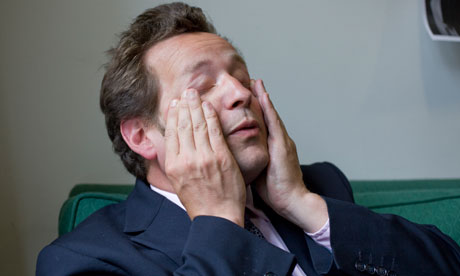 |
| Confused about his role |
Mr Vaizey has made a factually
inaccurate statement in parliament. He either doesn’t understand the nature of
his responsibility and job or he is trying to pass the buck to someone
else. This is what he said on the 12 Sep 2012:
“A £6
million fund has been provided by the Arts Council, which is now responsible
for superintending and promoting the library service”
And yesterday there was an article in
the bookseller where Nicky Morgan who is in charge of libraries at the Art
Council said this:
"When
the Arts Council took on the role of developing public libraries from the MLA
(Museums, Libraries and Archives Council), we were very clear that we would not
be undertaking a supervisory role, assessing whether library services were
'comprehensive and efficient”
ACE have extra problems without Vaizey imagining they do his job
for him, they are facing cuts themselves and will only have five of these
library relationship managers to cover England. Considering how badly the
envisioning the future of the libraries survey was done, they aren’t resourced
to supervise councils to make sure they comply with the act. Of course no one
really knows what the act means and the interpreter of the act won’t tell us,
he doesn’t even think it’s his job to uphold it! The act is quite clear though:
“From the commencement of this Act it shall be
the duty of the Secretary of State to superintend, and promote the improvement
of, the public library service provided by local authorities in England and
Wales, and to secure the proper discharge by local authorities of the functions
in relation to libraries conferred on them as library authorities by or under
this Act.”
Ed said at the select committee that:
“I have taken a view that I should
keep at arm’s length from the organisations involved in the various campaigns,
but that I should take advice from officials about whether or not they believe,
on the basis of their investigations, that there has been a prima facie breach
of the comprehensive and efficient duty. That is the position I have taken”
And yet in this transparent and open
government of ours the department won’t release the advice that he has been given because he has sat on his hands, my FOI was refused and severely
delayed and the ICO is currently looking into it. No doubt the department will
continue to resist releasing this advice as I’m sure they have been given a
very specific remit to investigate in such a way that always returns the result
the department wants, I.E to not intervene. If an authority closed every single
library I doubt the DCMS would judge it to be a breach of the act. It is
obviously Tory party policy to make savage cuts to libraries, the other parties
can cut too and blame the Tories so it’s a win/win for them too.
In opposition in 2009 Ed said the Tories would be:
"Launching a voluntary Library Charter, to which local authorities would be invited to sign up. This would set out minimum standards for libraries, a community reading strategy, provide guidance on what constituted a “comprehensive and efficient” library service under the Public Libraries Act, and so provide objective guidance for the use of the Secretary of State’s powers to call in a local authority’s decision to close a library."
I'm still waiting to see what Ed thinks are minimum standards for a library service that can be measured against the act, in the meantime I have emailed the DCMS and my MP
David Cameron asking what is going on and who is actually in charge of
libraries, we all know who is responsible.
Wednesday, 17 October 2012
Democracy, how far we have traveled (backwards)
The meaning of the word democracy is demos which means people and kratos which means power. The Greeks who gave us the root of our modern democracies had no political parties and the legislation was passed by a simple majority of the citizens who turned up to debate and vote. It was simple direct democracy. The Romans over threw their monarchy and became a republic with a system based upon the Greek one. They developed a constitution. It was by no means perfect as they were a two class society with the wealthy patricians only having the money required to run for office which excluded plebeians, who were the poor farmers and gate closing police officers. It evolved over time and was a fully credible political system with check and balances and the separation of powers, it was nobbled eventually but all empires that grow too large eventually become corrupted and fall, it happened in Rome, it happened in Star Wars and its bound to happen again.
This all took place thousands of years ago. So what do we have today?
Cllr Brett kindly put up a piece he mentioned in a tweet about why political parties are good and its a interesting read:
http://tonybrett.mycouncillor.org.uk/2012/10/16/a-note-on-the-system-of-political-parties/
I think his basic gist is that parties are loose coalitions of like minded people that hold similar views and it makes sense for them to coalesce behind a coloured rosette. He also thinks that if you had 48 completely independently minded people trying to reconcile 48 different views then decisions would never get taken and problems would never be fixed. And also that the parties are a sort of short hand for the voters to know roughly the views of the person standing because they stand for a particular party, it isn't possible for a councillor to know and be known by thousands of people.
You can read his post in full from the link but I think the above is a pretty fair assessment of his position. My problem with the party democracies are:
If voter turnout wasn't so low then the parties would have a true mandate to act on behalf of the electorate. The majority of which haven't taken a view because they either don't care, don't approve of the parties or simply believe the parties don't listen anyway. I don't know the voter turnout for Roman elections but I would imagine it was a higher percentage that modern local council ones.
The debate to decide on what the policies are from the parties are discussed, debated and voted on behind closed doors. If a single party has a majority in a council (most do) then the public debate between the parties is just for show, the ruling party have already agreed their position and will vote for it. There are hardly ever any rebellions. In Greece and Rome, all the debates and votes were made in public, because there were no parties there wasn't organised defined groups. Probably factions and blocks but not parties behind closed doors which can and has been subverted.
If the Greeks could have independent people debate the issue and vote on proposals and amendments I'm sure 48 people could too. I doubt even the most complex problems would have 48 solutions.
There are no checks and balances in local government, none. The local government act requires a scrutiny committee to provide a robust challenge to the cabinet. The leader of the cabinet appoints the committee members and they have all already agree on policy decisions behind close doors, they never defy cabinet and everything goes through on the nod. There is no checks and balances, the cabinet and the group hold complete power and in some cases because the leader also appoints the cabinet the power goes into the hands of one person and we end up with a dictatorship in all but name.
The Romans had similar principles to the current system in the USA with proper checks and balances and separation of powers and very short terms for candidates.
Ideology of the parties gets in the way, the polices put forward can be designed to either neutralise the other side or to play to their own supports. Its more the case in national politics (the current Tory lurches to the right) but it goes on at local level to.
Politics should be about understanding what the problems and issues are, coming up with a way to fix it and then doing it. Too often its about finding problems that don't exist for political reasons, coming up with a ideologically based solution that doesn't address the non-issue and then wasting all the time and effort trying to make it work. The big society being a good example of this.
Would we be better off with a more direct democracy with out parties? Yes I think so. What is needed perversely is more councillors, open debate and transparent voting. Of course it won't happen, the parties that represent the 35% won't want to give up there power.
ACE in a hole
Update 18/10/12
Got a reply "acknowledging my views" on their lack of proper promotion of this study. I am now trying to find out who the "library relationship manager" with responsibility for Oxfordshire is. I have found an interesting bit of information on the "envisioning the library of the future program" study. It was put out to tender and the contract was estimated to be between 65k to 85k
http://www.publictenders.net/tender/149309
As you would expect its choc full of meaningless waffle. The can spend over sixty thousand on outsourcing but they cannot spend a couple of hours and a hundred quid making sure the library authorities get their users to participate. They have a democratic duty to try and get the views of as many people as possible, this is a complete and utter shambles. The library service is being decimated, the minister has his head up his backside and the Arts Council are wasting thousands of pounds on a survey and for some reason decide to not tell library users outside of twitter a thing about it. I googled "library relationship manager" and very little comes up, if anyone knows who these elusive people are can they let me know, I want to know why my local authority were not asked to tell there users about this national survey. I thought I would add a video update, I really liked Phil Bradley's post with video the other day so here you go:
17/10/12
I have heard back from ACE (Arts Council England) on if they had contacted my local library authority Oxfordshire County Council to ask it to ask library users to fill in the:"Envisioning the library of the future" survey. In my previous blog post:
Although we did not directly contact each individual library authority in the country, we have disseminated information about the online consultation widely to library authorities via our regional network of Library Relationship managers and requested that the option to contribute to the online research is highlighted to the public."
Got a reply "acknowledging my views" on their lack of proper promotion of this study. I am now trying to find out who the "library relationship manager" with responsibility for Oxfordshire is. I have found an interesting bit of information on the "envisioning the library of the future program" study. It was put out to tender and the contract was estimated to be between 65k to 85k
http://www.publictenders.net/tender/149309
As you would expect its choc full of meaningless waffle. The can spend over sixty thousand on outsourcing but they cannot spend a couple of hours and a hundred quid making sure the library authorities get their users to participate. They have a democratic duty to try and get the views of as many people as possible, this is a complete and utter shambles. The library service is being decimated, the minister has his head up his backside and the Arts Council are wasting thousands of pounds on a survey and for some reason decide to not tell library users outside of twitter a thing about it. I googled "library relationship manager" and very little comes up, if anyone knows who these elusive people are can they let me know, I want to know why my local authority were not asked to tell there users about this national survey. I thought I would add a video update, I really liked Phil Bradley's post with video the other day so here you go:
17/10/12
I have heard back from ACE (Arts Council England) on if they had contacted my local library authority Oxfordshire County Council to ask it to ask library users to fill in the:"Envisioning the library of the future" survey. In my previous blog post:
(http://questioneverythingtheytellyou.blogspot.co.uk/2012/10/not-so-ace.html)
on
this I asked who they had contacted and got the rather odd response of:
"We have also contacted a range of organisations requesting they share
the survey with the public via their networks and newsletters, including
organisations representing parents, older people, disabled people, educators,
young people in higher or further education, book and art groups, social,
cultural, ethnic and faith groups and people and groups campaigning for local
government services, for example post offices. In addition, we have contacted
library member groups and library service contacts asking them to promote the
survey to the public."
My
local county council clearly hadn't heard a peep from them so I asked directly
if they had contacted them and got:
"We have a limited budget to support our work with libraries and decided
the online approach was the best way to supplement our workshops and open up
this research to a wider audience. This online element will close on Sunday 21
October.
Although we did not directly contact each individual library authority in the country, we have disseminated information about the online consultation widely to library authorities via our regional network of Library Relationship managers and requested that the option to contribute to the online research is highlighted to the public."
I
have never heard of the Library Relationship managers so have no idea what this
actually means. I have questioned the limited budget to support there work line
though so have responded with another email:
"Presuming the MLA passed on a list of all the 151 library authorities in
a spreadsheet with contact names and/or emails to contact them all directly
then doing either a email merge or a mail merge to post letters would be the
work or a couple of hours for one person, the email merge being free and a mail
merge the cost of:
151 first class stamps 90 pounds
151 envelopes (1p per envelopes)
151 sheets of paper (1p per sheet)
So the cost to contact every library authority by letter would be under
£100 in stationary and postage costs. The cost to email them would be
free. To write a simple notification letter and do the mail/email merge would
not take one person more than half a day. I'm amazed that this didn't take
place.
Do you not hold a current electronic list with contact details for the
151 library authorities?
With best regards,"
I'm
not very happy about this, it for me shows once again that consulting by
government, regardless of the level is just a box ticking exercise and they
make no real effort to understand the views of the electorate. If I get a
further response I will put in a update.
Saturday, 13 October 2012
Information privacy
 |
| What you read says a lot about you |
When you consider the data protection act prevents the release of personally identifiable information if it has the postcode as its theoretically possible to identify someone from this and tie it to what ever information is there(average 7 people per postcode I think) then how is it possible that everyone using a library is allowed to see what everyone else is reading? You could just take off the name from the books waiting to be collected of course but how would people know the book is definitely for them? There were two copies of shades of gray the other day, some people may order the same book at different times and collect a book thinking its for them when theirs won't be available for weeks, probably would be common when new books come out. Even putting on the membership number of the person is probably slightly dodgy in the data protection act as it is a unique identifier which I believe isn't allowed. There may be a fix for this but the current system of sticking little name tags onto the books which in future will be done by volunteers isn't satisfactory. Sadly public bodies choose to adhere to the letter of the law only when it suits them, other times they always have ways of wriggling out. When people need information and help for private issues they either have to accept people are going to know what they are reading about or sadly they will have to start looking elsewhere.
Tuesday, 9 October 2012
Not so ACE
Update: 10/Oct/2012
I replied to ACE with further questions:
And got this response in return:
--------Original post---------
I replied to ACE with further questions:
1. What steps have been taken to let people know about the existence of the survey?
2. Did you let the library authorities know and ask them to inform their library users who will be unaware of its existence otherwise?
And got this response in return:
"We are directing people to the survey from our own website with a link from the scrolling banner on the front page. We have also promoted it via twitter using the hashtag #ACElibraries and by targeting specific groups to spread the word through @mentions.
We have also contacted a range of organisations requesting they share the survey with the public via their networks and newsletters, including organisations representing parents, older people, disabled people, educators, young people in higher or further education, book and art groups, social, cultural, ethnic and faith groups and people and groups campaigning for local government services, for example post offices. In addition, we have contacted library member groups and library service contacts asking them to promote the survey to the public.
If you have any further questions please do get in touch."
I have asked directly if they had sent this information to my County Council, Oxfordshire and I have also asked Oxfordshire County Councils library service if they know anything about it. I have double checked with my local library and a library in another part of the county and neither had any idea about this survey. I will update again when I get responses. I'm cross because someone isn't doing their job properly and the residents of Oxfordshire are being denied their right to join the political process.
--------Original post---------
I'm
still not sure what parts of the public library service ACE (Arts Council England) are
responsible for but the other week they put out a survey entitled "Envisioning the library of the future" I don't know much about the company that created the survey but the
design was obviously created from a earlier survey "what do you want from survey websites in the early 90s" to see what I mean have a look here:
I
only hope ACE got this at a very cheap price. I was amazed that ACE are only
doing a online survey considering the demographic of library users, I myself
only found out about it via twitter, there was nothing in our library (as far as
I can see) about this and you can count the twitter users in our local library
on one finger. So obviously I stuck in a email to ACE to have a moan and here is the response:
"Dear Trevor,
Thanks for getting in touch.
There is not an offline version of the survey but with
public access computers in libraries, library staff will be able help people to
get online and complete the survey.
We are trying to give as many people as possible an
opportunity to take part in the research, so as well as the online survey, we
have also run face-to-face workshops with members of the public in various
parts of the country. This is so that we have a wide range of people
contributing to our discussion and developing ideas. We recruited participants
for these workshops so that they broadly represented the general population.
The online survey is designed to open up our
consultation to a wider number of people than we could reach through the
workshops alone – it is an efficient and cost-effective way of reaching a large
number of people.
If you have any further queries please don’t
hesitate to contact us.
Kind regards,"
I confess to knowing nothing about the workshops
either, doing a google news search on the title of the survey only returns one
hit:
So there is hardly a massive publicity drive to get
people filling this thing in. Why are they not even trying to promote this
survey to get a full range of views? Obvious answer is that its just another
box ticking exercise to say they have consulted in the piss poor excuse for
democracy we have in this country. Sigh
Monday, 8 October 2012
Power to the people
I have copied two chunks of text from wiki page of the Yes Prime Minister episode "Power to the People" One of the writers of Yes Minister did a column on the subject and suggested it should be tried in real life to end the power of the party machines in local government. The wiki page is here:
http://en.wikipedia.org/wiki/Power_to_the_People_(Yes,_Prime_Minister)
And if I ever find the article I will post it but it, its does exist I just am unable to find the bugger, below is the text from the relevant bit of plot from the episode:
Not for the first time, Jim Hacker is experiencing problems with local government. He bemoans the fact that councillors are elected by 25% of the population, who base their choice on the performance of the national government, and, once installed, spend four years on a "subsidised ego trip". During this time, the Prime Minister argues, everything they do is counterproductive and he gets the blame for it.
Hacker is in his upstairs flat in 10 Downing Street with his wife, Annie. He invites over Dorothy Wainwright, his political advisor, as he wishes to hear her views on local government. She counsels a scheme recently put forward by a Professor Marriott, which would give power back to the people by making town halls genuinely accountable. This involves making each councillor responsible for just 200 local residents, which would then lead to a large local council that would report to a smaller executive committee. Councillors would then be in close contact with those that voted for them — and would have to listen to their concerns. The PM is enthused and wishes to proceed with the plan, calling it "Hacker's Reform Bill".
http://en.wikipedia.org/wiki/Power_to_the_People_(Yes,_Prime_Minister)
And if I ever find the article I will post it but it, its does exist I just am unable to find the bugger, below is the text from the relevant bit of plot from the episode:
Not for the first time, Jim Hacker is experiencing problems with local government. He bemoans the fact that councillors are elected by 25% of the population, who base their choice on the performance of the national government, and, once installed, spend four years on a "subsidised ego trip". During this time, the Prime Minister argues, everything they do is counterproductive and he gets the blame for it.
Hacker is in his upstairs flat in 10 Downing Street with his wife, Annie. He invites over Dorothy Wainwright, his political advisor, as he wishes to hear her views on local government. She counsels a scheme recently put forward by a Professor Marriott, which would give power back to the people by making town halls genuinely accountable. This involves making each councillor responsible for just 200 local residents, which would then lead to a large local council that would report to a smaller executive committee. Councillors would then be in close contact with those that voted for them — and would have to listen to their concerns. The PM is enthused and wishes to proceed with the plan, calling it "Hacker's Reform Bill".
Subscribe to:
Posts (Atom)